

Dr. Ali Atif
Maxillofacial Surgeon
MDS, MPH, MBA, FAM, FICOI, GCOI
Chancellor, International Education Board, London.
Dr. Ali Atif serves as the Chancellor for the International Education Board for Aesthetic Medicine & Surgery, UK. He is an internationally board-certified master trainer and Fellow of Aesthetic Medicine (Germany), with over a decade of expertise in Facial Plastic Surgery. He also holds fellowships from the International Congress of Oral Implantology (U.S.A) and the Global College of Oral Implantology (Italy).
We ProvideMedical Services That You Can Trust
We offer trusted medical services, prioritizing your health with expert care and personalized treatments for all needs.
Explore Solutions
gilroy
hair transplant Bring Back What’s Yours
Your Journey to Natural Confidence Starts Here.
Getting Started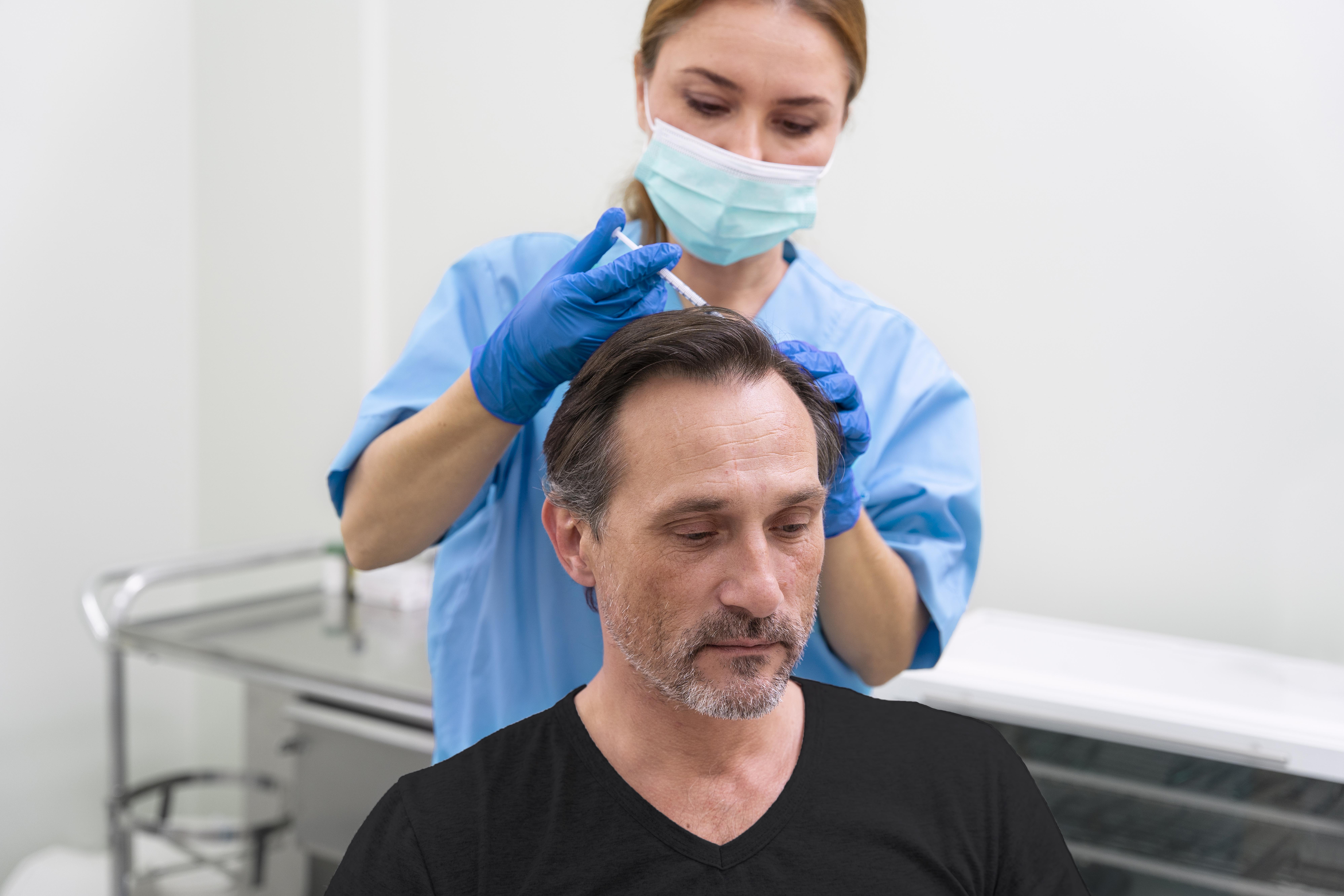
gilroy
About us
about Hair Transplantation
The history of hair transplants can be traced as early as 1822 when Dieffenbach experimented with hair transplants in birds. The field of surgical hair restoration thereafter progressed in two different directions where one group started exploring the role of autografts while other segments of surgeons attempted various flaps and serial excisions, the former technique by far dominated and was adopted globally with time.
Hair loss is a worldwide problem affecting both sexes, males being more. At present, Hamilton–Norwood classification system for male pattern baldness and the Ludwig system for females are the most commonly used classification systems.
Hair Transplant
Cost & Procedure
Hair Transplant Cost in India
People who want to know the Hair Transplant Cost in India should take a look at the following table:
| Grafts | FUE Costs in India |
|---|---|
| 1000 Grafts | Rs. 30,000 /- |
| 1500 Grafts | Rs. 45,000 /- |
| 2000 Grafts | Rs. 60,000 /- |
| 2500 Grafts | Rs. 75,000 /- |
| 3000 Grafts | Rs. 90,000 /- |
| 3500 Grafts | Rs. 1,05,000 /- |
| 4000 Grafts | Rs. 1,20,000 /- |
| 4500 Grafts | Rs. 1,35,000 /- |
FUE Hair Transplant – Everything You Need To Know
The aim of this article is to discuss the various aspects of the novel FUE technique in detail, associated risks and complications, authors’ experience, graft holding solutions, recent advances, and other key factors.
The procedure is performed under local anesthesia, and sedation/general anesthesia is rarely indicated (usually in apprehensive patients or those allergic to local anesthetic solution).
Detailed Procedure
The patient is asked to trim or shave head a day before surgery. (The donor area hair can be left around 1 mm for visualization and orientation.)
Premedication protocol includes antibiotics (cephalosporins, azithromycin, etc.), steroid (methylprednisolone 8 mg), and an antiemetic orally 30 minutes before surgery.
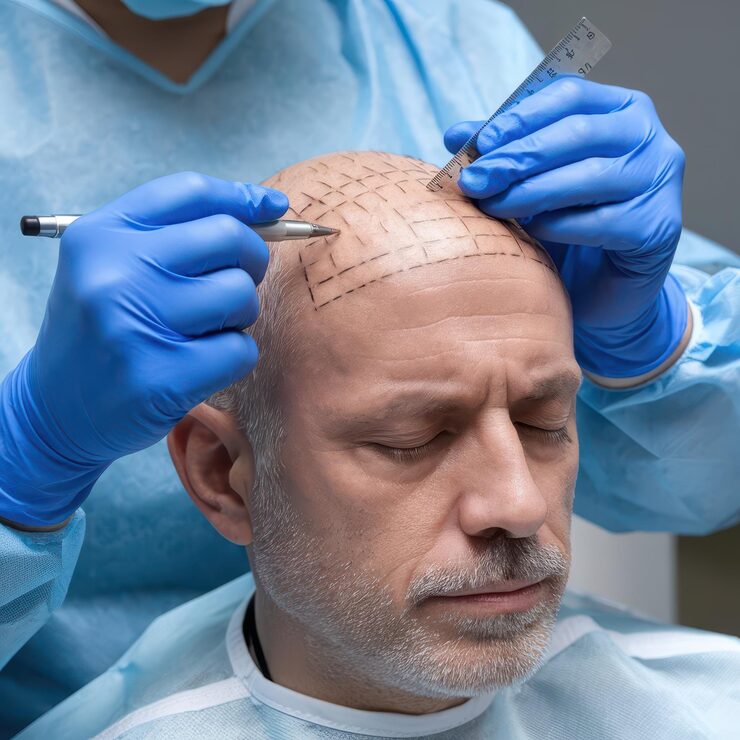
The recipient area is carefully marked keeping in mind the existing baldness, susceptible areas, and patient expectations. Surface anesthesia with EMLA cream helps in reducing injection pain but needs to be applied 1–2 hours before surgery with an occlusive dressing for optimal action.
After surface asepsis with povidone-iodine or chlorhexidine solution, ring block anesthesia of occipital and frontal region (frontal region anesthesia can be given just prior to recipient site preparation or once grafts are harvested) is given followed by tumescent infiltration of donor and recipient area with 30 ml 2% lignocaine mixed with 5 ml 0.5% bupivacaine, 30 ml normal saline, 0.5 ml adrenaline (1:1000), and 1 ml triamcinolone 40 mg/ml in a normal adult patient.
Once desired anesthesia is achieved, the follicular units are harvested using adequate size punch (0.7–1 mm) and forceps.
FUE Benefits
HAIR RESTORATION
FUE Hair Transplantation Benefits
What are the Pros and Cons of the FUE technique?
| Pros | Cons |
|---|---|
| Less visible scar | Time-consuming |
| Shorter postoperative recovery | Longer learning curve |
| Less armamentarium and staff required | Higher transection rate / fragile grafts with tissue loss |
| Minimum graft preparation | Higher chances of buried grafts or folliculitis |
| Body hair can be used (body hair transplantation) | Wider donor area is required |
| Can be done in tight scalp cases | Multiple sessions may be needed for extensive cases |
| Minimal risk of nerve injury or excessive bleeding | Subsequent sessions may become difficult due to tiny scars |
| The surgeon can selectively pick grafts from the donor area | Very fine trimming of hair is needed |
FUE Hair Transplantation Process
The grafts are preserved in cold 0.9% saline. Once the grafts are harvested, the recipient slits are prepared using 18–20 gauge needles or blades. Each follicular graft is then carefully transplanted in the prepared slits. Utmost care should be practiced while handling grafts and they should be kept moist at all times during the procedure.
Once the procedure is finished, the surgical area is thoroughly cleaned with saline. An antibiotic dressing is done on the donor area. Routine antibiotics, steroids, opioid analgesics, and multivitamins are prescribed along with postoperative instructions.
The procedure is very well tolerated by most patients. Postoperative pain is often mild and easily controlled with oral analgesics.
Postoperative Care & Healing
Periorbital or facial edema occasionally occurs on the third or fourth day after surgery and may be aesthetically unpleasant. Cold packs, proper sleep posture, and the use of intraoperative and postoperative steroids help prevent or reduce swelling.
Scabs should be washed off gently with mild shampoo from the second or third day onward. The grafts become secured to the recipient site by the sixth–ninth postoperative day. Local application of aloe vera has been found beneficial in folliculitis and wound healing.
Folliculitis or pustules at the recipient site are common after a few weeks but usually subside spontaneously without harming grafts; oral antibiotics are rarely needed.
The donor site heals but hypopigmented scars (about 1.5–1.6 mm) are often visible. Other rare complications include adverse drug reactions, mild bleaching of hair due to hydrogen peroxide irrigation, sensory disturbances, hiccups, and transient hypopigmentation.
Immediately after hair transplant, some patients may experience “shock loss” — temporary shedding of grafted and nearby hair — which is normal and typically resolves as the new hair grows.

FUE Transplant
Minimally invasive extraction of individual follicular units for natural results.

Post-Op Care
We ensure every patient heals comfortably with expert follow-up and guidance.

Expert Team
Performed by certified surgeons with years of experience in advanced FUE and FUT techniques.
Time FUE Hair Transplants Takes to Heal
The grafted hair may usually take 6–12 months to grow, but may vary from patient to patient. One of the most common complaints and complications of hair transplants is “unexpected results.” The term “unexpected results” here may encompass visible results of the surgery. Generalized reduction of the density of the donor area or “moth-eaten appearance” may appear when more grafts are harvested.
FUE Hair Transplants Time Duration
Two-sitting FUE is a preferable option in cases with large bald areas where the surgeon and patient can both assess the donor area, result, finances, and then plan for a second surgery of the remaining bald area. Unnatural hairline, inadequate graft density, etc., are major concerns of patients, which may be due to inexperienced hands or over-expectations.
FUE is a meticulous and time-consuming technique; hence, both surgeon and patient should be aware of the skills, limitations, and realistic expectations before the procedure.
FUT Technique
HAIR RESTORATION
FUT Hair Transplantation Technique
FUT and FUE can both be done simultaneously or in separate sittings (FUT should be done first in such circumstances), and better results can be achieved. In cases without complete baldness of crown and vertex, the existing hair should be preserved with supportive techniques like medications, platelet-rich plasma (PRP), or laser therapy to prevent further hair loss.
Fall of grafted hair mostly occurs due to harvesting of grafts from the hair-loss-prone zone, and hence, identification of a safe donor area prior to surgery is crucial for optimal results.
Hair Transplantation Techniques
There are two most important techniques of Hair Transplantation:
- FUE (Follicular Unit Extraction)
- FUT (Follicular Unit Transplantation)
Hair Cost
HAIR TRANSPLANTATION
Hair Transplantation Cost
People who want to take treatment from the best doctors of India can contact us via call, email, or Skype. You will get the best Hair Transplant Treatment in India from leading specialists. Our goal is to provide advanced FUT and FUE procedures with proven results and maximum safety.
You can have a look at the contact details in the following chart.



Hair Blog
LATEST UPDATES
Recent Articles & Insights
Stay informed with expert insights, latest techniques, and real patient experiences in the world of hair restoration and transplant care.


Copyright © 2024 by all right reserved